Lord Bauer's View on Aid Economics
- Get link
- X
- Other Apps
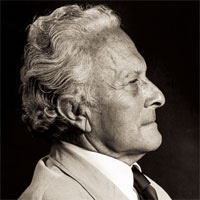
Hailing from Budapest, Peter Thomas Bauer, also known as Baron Bauer, was a British development economist originally from Hungary. Born on November 6, 1915, and passing away on May 2, 2002. Famous for challenging the widespread belief of his time. The post world war development economics saw a major change in the existing command economies as predicted by economist Friedrich Hayek. Friedrich's prediction brought about the free market policies that inspired many including Margaret Thatcher and Ronald Reagan. It was even a philosophy imbibed by international institutions as the World Bank.
Many thought that the best way for developing countries to progress was through government-led development plans with the backing of foreign aid.
However, Bauer stood against this idea, advocating for a different approach. He felt that crony capitalism would be born out of foreign aid.
Bauer focused on development economics, international development, and foreign aid in most of his work.
He aimed to persuade fellow development experts that things like central planning, foreign aid, price controls, and protectionism actually keep poverty going instead of getting rid of it.
According to Bauer, when the government gets heavily involved in the economy, it not only doesn't help but also makes things worse by bringing politics into economic matters and limiting individual freedom.
Bauer played a significant role in shaping thoughts about what drives economic progress.
His ideas had a notable impact, even influencing the World Bank's perspective in its 1997 World Development Report.
The report echoed Bauer's long-standing viewpoint, challenging the outdated belief that good advisers and experts could come up with effective policies, which good governments would then carry out for the benefit of society.
The report acknowledged the flaws in this thinking, recognising that governments often pursued impractical plans, private investors hesitated due to doubts about public policies, leaders' stability, and corruption became widespread, resulting in developmental setbacks and persistent poverty.
According to Bauer, the core of development lies in expanding individual choices. He believed that the state's role should be to safeguard life, liberty, and property, allowing individuals to pursue their own goals. Bauer emphasised limited government over central planning, asserting that it was the key to development.
Contrary to the belief that the West determines the economic fate of the Third World, Bauer rejected the notion of Western guilt.
He was against the idea that past Western exploitation explained Third World backwardness and challenged the dependency on Western donations for economic progress.
He stated that most first world nations started poor and grew with time. Had this cycle been applied on those nations at the time. Humanity would still be stuck in the stone age.
Bauer aligned himself with libertarian traditions, challenging established beliefs in development economics through works like "Dissent on Development." Debunking the notion that poverty is an endless cycle and stating his strong belief that central planning and large-scale public investment are prerequisites for growth.
Bauer also criticised the assumption that disadvantaged individuals wouldn't save or lack motivation to improve their conditions.
Opposed to the concept of "compulsory saving," preferring to call it "special taxation," and, like modern supply-side economists, highlighted the negative effects of high taxes on economic activity.
Additionally, he foresaw that government-directed investment funded by "special taxation" would exacerbate "inequality in the distribution of power."
Bauer's time in Malaya during the late 1940s and in West Africa shaped his beliefs about the significance of individual effort, especially among small landowners and traders, in transitioning from just getting by to enjoying a better quality of life.
He highlighted the crucial role of the informal sector and championed the "dynamic gains" from international trade. These gains refer to the overall benefits that come from exposure to new ideas, production methods, products, and people. Bauer demonstrated that barriers to trade, along with strict immigration and population policies, prevent countries from reaping these advantages.
According to Bauer, government-to-government aid isn't essential or adequate for development; in fact, it might even hinder progress. He warned against the dangers of aid, explaining that it can increase government power, lead to corruption, misallocate resources, and weaken civil society.
Bauer also challenged what Ralph Raico termed the "timeless approach" to history.
He called the method an excellent way to transfer money from poor people in rich countries to rich people in poor countries. The government to government transfer of foreign aid created the problem of the third world.
This fallacy occurs when someone overlooks the events and conditions that existed before and acted as prerequisites for the analysed event or situation.
Bauer emphasised the many centuries it took for economic growth in the Western world and highlighted the interplay of various cultural factors as crucial preconditions for that growth.
Unfortunately, he was never too optimistic about the change ever being brought to implementation. Government to Government aid has increased tenfold.
The 'heresy' of this vicious cycle as Lord Bauer stated has continued. Foreign aid always has vested interests that cannot be ruled out.
Like invisible strings keeping the class economies stuck in a dependent heirachy of various levels.
- Get link
- X
- Other Apps


Comments
Post a Comment