How does your phone manage to read your fingerprint?
Modern technologies never cease to amaze the human mind. The magical things we can come up with at a click of a button. But as with progressive technology comes mechanics and systems set in place to protect it.
Things we seemingly take for granted as “by the way” features on our latest smartphones.
Things like fingerprint scanners have become essential for the modern day smartphones.
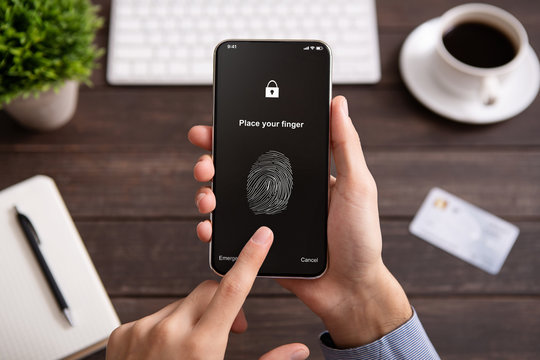
Every time your finger presses the screen to unlock it, a specialised process takes place for your phone to recognise you, the user.
Phones use one of three different technologies to read your fingerprint: optical, capacitive or ultrasonic. An optical fingerprint reader is the oldest of the three. It uses a specialised miniature camera to take a picture of your finger, often backlit with little LED’s or the phone’s screen.
Modern technologies never cease to amaze the human mind. The magical things we can come up with at a click of a button. But as with progressive technology comes mechanics and systems set in place to protect it.
Things we seemingly take for granted as “by the way” features on our latest smartphones.
Things like fingerprint scanners have become essential for the modern day smartphones.
Every time your finger presses the screen to unlock it, a specialised process takes place for your phone to recognise you, the user.
Phones use one of three different technologies to read your fingerprint: optical, capacitive or ultrasonic. An optical fingerprint reader is the oldest of the three. It uses a specialised miniature camera to take a picture of your finger, often backlit with little LED’s or the phone’s screen.
Unfortunately, these sensors are easy to fool — even a good photo can trick them, so it may be combined with a capacitive sensor, the second technology, to check there is really a finger there.
A capacitive fingerprint sensor uses a grid of tiny capacitors that store electricity, which is discharged only at the points where your fingerprint ridges touch. An array of thousands of capacitors can then be used to map the pattern of your fingerprint. Sometimes these sensors also support swipes or force sensing.
The third and most advanced form of fingerprint sensing uses ultrasonics. Much like the ultrasonic scanners used for medical purposes, an ultrasonic sound pulse is transmitted to your finger and the reflected pulse is measured. Bats, whales and dolphins use ultrasonic to understand the shape of their surroundings; the sensors on a smartphone use it to understand the 3D shape of the ridges in your fingerprint. It can even work through the phone screen.
Unfortunately, these sensors are easy to fool — even a good photo can trick them, so it may be combined with a capacitive sensor, the second technology, to check there is really a finger there.
A capacitive fingerprint sensor uses a grid of tiny capacitors that store electricity, which is discharged only at the points where your fingerprint ridges touch. An array of thousands of capacitors can then be used to map the pattern of your fingerprint. Sometimes these sensors also support swipes or force sensing.
The third and most advanced form of fingerprint sensing uses ultrasonics.
Much like the ultrasonic scanners used for medical purposes, an ultrasonic sound pulse is transmitted to your finger and the reflected pulse is measured.
Bats, whales and dolphins use ultrasonic to understand the shape of their surroundings; the sensors on a smartphone use it to understand the 3D shape of the ridges in your fingerprint. It can even work through the phone screen.
But have you ever wondered how your phone manages to decipher the unique patterns of your fingertips? Join us on a journey to unravel the secrets behind this fascinating technology.
Understanding the Basics:
Fingerprint recognition technology has evolved over the years, and today's smartphones employ three main techniques to read your fingerprint: optical, capacitive, and ultrasonic.
Optical Fingerprint Scanning: The oldest of the three, optical fingerprint scanning uses a miniature camera to capture an image of your finger. Typically, this camera is backlit with LEDs or the phone's screen. However, despite its longevity, optical sensors are vulnerable to deception. Even a well-crafted photo can trick them, highlighting the need for additional security measures.
Capacitive Fingerprint Sensing: To address the shortcomings of optical scanning, capacitive fingerprint sensors enter the stage. Operating through a grid of tiny capacitors that store and discharge electricity, these sensors map the pattern of your fingerprint. This method ensures a more secure authentication process by confirming the physical presence of a finger, adding an extra layer of protection against fraudulent attempts.
Ultrasonic Fingerprint Scanning: At the pinnacle of sophistication, ultrasonic fingerprint scanning takes inspiration from medical applications. It involves transmitting an ultrasonic sound pulse to the finger and measuring the reflected pulse. This method, akin to how bats and marine mammals navigate their surroundings, allows smartphones to understand the three-dimensional shape of fingerprint ridges. Remarkably, ultrasonic scanners can even operate through the phone screen, combining security with user-friendly convenience.
Fingerprint technology has become an integral part of our daily lives, seamlessly woven into the fabric of our smartphones and other devices. While this biometric marvel offers unparalleled convenience, it is crucial to peel back the layers and acknowledge the potential dangers lurking within the seemingly secure world of fingerprint recognition.
Security Concerns:
As with any technology, fingerprint recognition is not foolproof. While the more advanced methods like ultrasonic scanning provide a higher level of security, simpler techniques like optical scanning can be deceived by high-quality photos or replicas of fingerprints. This vulnerability poses a risk of unauthorised access to sensitive information, raising concerns about the overall security of devices relying solely on fingerprint technology.
Data Breach and Privacy Issues:
Storing biometric data on devices or centralised servers introduces the risk of data breaches. In the event of a security lapse, hackers could gain access to a treasure trove of sensitive information, including fingerprint data. Unlike passwords, which can be changed, fingerprints are immutable, amplifying the potential consequences of a breach and compromising users' privacy on a profound level.
Legal and Ethical Challenges:
The use of fingerprint technology also raises legal and ethical questions. Law enforcement agencies' increasing reliance on fingerprint databases for criminal investigations prompts concerns about mass surveillance and the potential misuse of biometric data. Striking a balance between security and individual privacy rights becomes a delicate challenge in a world where fingerprint technology is becoming ubiquitous.
Cross-Device Authentication Risks:
As fingerprints are used for authentication across various devices and platforms, a compromise on one device could potentially open the door to unauthorised access on others. The interconnected nature of our digital lives makes it imperative to consider the broader implications and potential cascading effects of a security breach involving fingerprint data.
Health and Environmental Implications:
The materials used in some fingerprint sensors, especially older models, may contain substances that pose health and environmental risks. Chemicals like gallium arsenide and indium arsenide, used in certain sensor technologies, can be hazardous. Additionally, the disposal of devices containing these materials raises concerns about electronic waste and its environmental impact.
While fingerprint technology continues to revolutionise the way we interact with our devices, it is essential to approach its adoption with a critical eye. Acknowledging the potential dangers is not a call to abandon this technology but a reminder to continually assess and enhance its security features. As we tread the path of innovation, striking a delicate balance between the benefits and risks of fingerprint technology becomes paramount in ensuring a safer and more secure digital landscape.


Comments
Post a Comment