The Gandhi Way: His Philosophy
- Get link
- X
- Other Apps
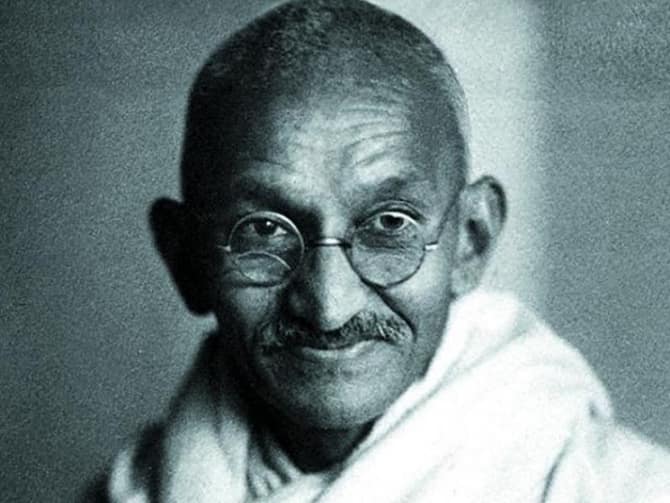
"In a gentle way, you can shake the world."
To leave a genuine and enduring impact on the life of another person represents a formidable achievement. Extending that impact to encompass an entire nation, crafting a legacy that echoes across the globe, is a task as challenging as it is seldom accomplished. Throughout history, only a select few individuals can lay claim to such profound influence, and among them stands Mahatma Gandhi.
Mohandas Karamchand Gandhi, born on October 2, 1869, in India, traversed a remarkable journey. Growing up in western India, he pursued legal studies in London. His trajectory led him to South Africa, where he initially sought employment but eventually dedicated himself to advocating for the rights of Indians in that region. Upon his return to India, Gandhi immersed himself in politics, fervently championing the cause of Indian independence from British rule.
Gandhi's life, though marked by achievements, was not devoid of controversy. Critics have raised questions about various aspects, including his personal relationships, attitudes towards Africans and Jews, and his stance against modern technology. Despite these concerns, Gandhi steadfastly opposed racial discrimination in South Africa, tirelessly campaigned for India's liberation from British colonialism, and actively combated the rigid caste system within India. All the while, he remained an unwavering proponent of nonviolence. Notably, the UN International Day of Non-Violence is observed on October 2 in commemoration of Gandhi's birth.
The concept of Gandhian non-violence, also known as Ahimsa, holds profound philosophical implications deeply rooted in Mahatma Gandhi's world-view. At its core, Gandhian nonviolence transcends the mere absence of physical force; it embodies a holistic philosophy encompassing ethical, spiritual, and social dimensions.
In a philosophical sense, Gandhian non-violence emanates from the belief in the interconnectedness of all living beings. It reflects a deep understanding that harming others ultimately inflicts harm upon oneself, disrupting the inherent harmony of the universe. Ahimsa, therefore, becomes a guiding principle for individuals seeking not only personal transformation but also the betterment of society as a whole.
One fundamental aspect of Gandhian non-violence is its emphasis on the power of love and compassion. Gandhi envisioned a world where individuals recognise the humanity in each other, fostering empathy and understanding even in the face of adversity. Love, in this context, is not a mere emotion but a force capable of transforming relationships, communities, and societies.
The philosophy of non-violence also extends to the realm of moral courage.
For Gandhi, practicing Ahimsa required a steadfast commitment to truth, justice, and righteousness. Non-violent resistance, in his view, was not a sign of weakness but a courageous and principled stand against injustice. This aligns with the belief that passive acceptance of wrongdoing is, in fact, a form of violence against one's own moral integrity.
Gandhian non-violence is not confined to external actions; it delves into the inner realm of self-discipline and self-purification. Gandhi argued that true nonviolence demands conquering one's inner demons, mastering the impulses that lead to aggression and hatred. Thus, the philosophy becomes a journey of self-discovery and self-improvement, aiming for a state where one's thoughts, words, and deeds align with the principles of nonviolence.
From a social perspective, Gandhian non-violence advocates for constructive and transformative action.
It rejects the notion that change can only be achieved through coercion or force. Instead, Gandhi proposed the idea of Satyagraha, a form of nonviolent resistance grounded in truth and moral force.
Satyagrahis seek to awaken the moral conscience of their adversaries, inviting them to the path of justice and righteousness.
In essence, Gandhian nonviolence is a comprehensive philosophy that addresses the ethical, spiritual, and social dimensions of human existence. It invites individuals to cultivate a deep sense of interconnectedness, to harness the transformative power of love, and to exhibit moral courage in the pursuit of truth and justice.
As a timeless and universal concept, Gandhian nonviolence continues to inspire movements for social change and remains a beacon for those seeking a more harmonious and just world.
- Get link
- X
- Other Apps


Comments
Post a Comment