One Nation One Election?
“We the People...”
_____________________________________________
The First Edition
One Nation One Election?
From the Desk of Amaan Ojha
Sardar Vallabhbhai Patel once said,
"Every citizen of India must remember that..he is an Indian and he has every right in this country but with certain...duties."
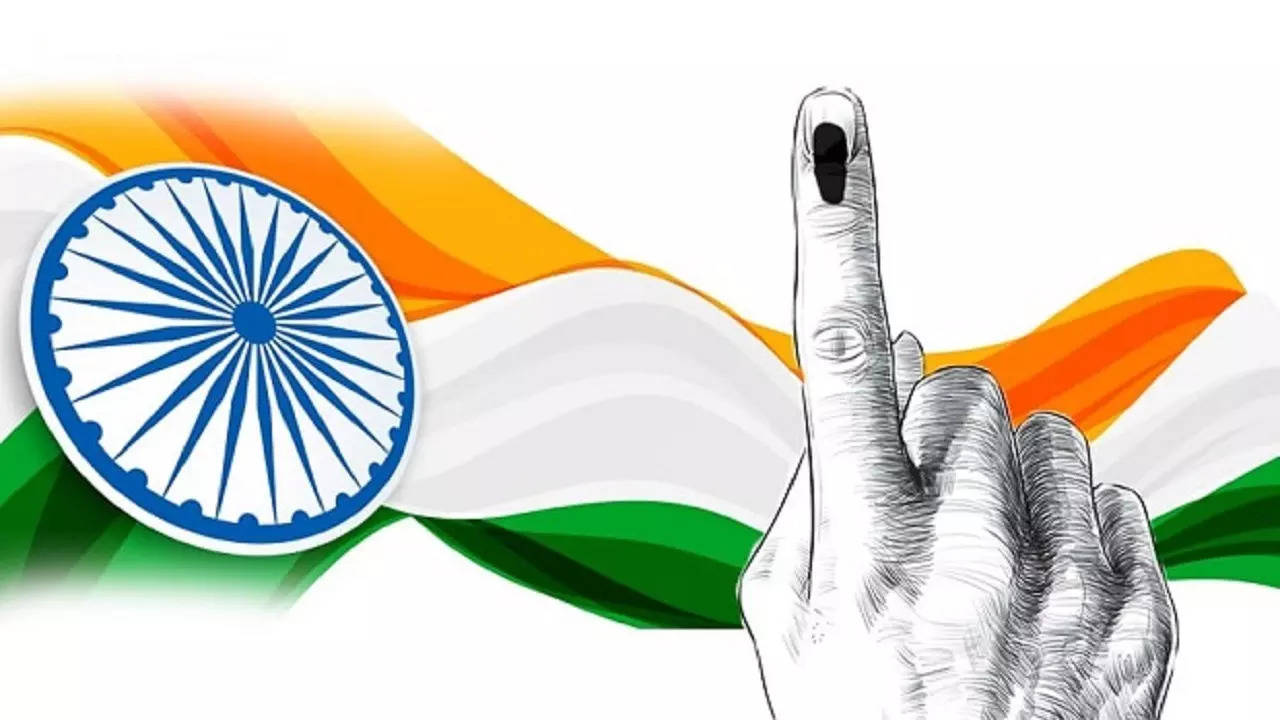
The most important one of those duties as an Indian citizen is to vote.
When the first votes were cast to ballot in our Independent nation, it was October 1951. It took over a hundred days from the 25th of October 1951 to the 21st of February 1952 to complete this exercise of electoral endeavours.
Today the panel to explore ‘One-nation, One poll’ is underway as India sets to decide if it will be a part of a small club of countries that hold concurrent polls. Those countries are Belgium, Sweden and South Africa.
'One Nation, One Election' refers to the idea of simultaneously holding the Lok Sabha polls and the elections to various state assemblies. The idea has been mooted several times previously and has been studied by the Law Commission of India.
This implies that elections across the country will be held simultaneously.
The Prime Minister has propelled the idea since coming into power in 2014. Citing the valid
financial burden that the cycle has on the nation's overall expenditure. Reports of a whopping Rs 60,000 crore was spent on the 2019 Lok Sabha elections. (source: India Today)
However, upon bringing about the proposition to the top opposition members in 2019 at a collaborative meeting on the issue, a few notable opposition leaders decided to give the meeting a skip subtly implying their stance on the matter.
Former President Ram Nath Kovind too resonated with the same views expressing his support for the idea after taking the chair in 2017.
Set up under the former President’s tenor. The committee aims to see the feasibility of this process for a country like India. But is the election process cost turning into an obstacle to development? On the plus side, one could argue that the concept of a combined state and national election presents a unique opportunity to the Indian voter. One who is subject, to a vast and costly election campaign that reaches us on our telephone screens.
Street banners, billboards and news channels are all vying for our undivided attention, especially our vote. Maybe all that money can go for better causes than winning elections.
An issue was raised, about the fact that normal administrative duties become affected by elections as officials engage in polling duties.
So removal of such a cumbersome system would increase efficiency. The amount of money our honourable politicians expend on the overall campaign can be realistically put to a far more efficient test as a combined state and national election push their mandates and manifestos to be far-reaching and inclusive.
A noticeable trend with the isolated state and national elections has allowed parties to resort to in all
respects, a divided approach. Only focused on getting across the line in one state at that point in
time. Catering their time and energies to that one state’s requirements rather than what a state is.
A well-oiled part of a larger National Machinery. State elections need to start getting the same attention and mandate National Elections receive. As they tend to get largely sidelined as sideshows to the main event.
The need for the voter to make an overall educated and wise decision comes down to a whole-hearted approach rather than a single overall election. The alleged horse-trading tactics and dramatics are supposed to largely be a thing of the past.
A singular election process will allow that, as claimed.
Now what could be the possible drawbacks of this?
On the flip side, let's see the evidence of alleged poll tampering. In the Chandigarh Mayoral
Elections. Being a matter of rather grave distaste even to the Supreme Court Judges presiding over it.
The IDFC Institute’s study in 2015 of voter choice stated that 77 % of voters would choose the
same winning party or alliance in the State Assembly and the Lok Sabha if simultaneous elections were held. If elections were held for six months, only 61 % would choose the same party.
The monumental challenges a singular election can pose on the nation's federalism also comes into question as after the institutionalisation of this process will States have the same level of
recognition and identity as before? Or will the National Mandate and the Nation’s requirements
silence regional and local issues?
However, the timing of this decision can be hotly questioned.
When the Swedish V-Dem Institute downgraded India’s status from a Democracy to an Electoral Autocracy by the end of 2023, obviously alarm bells were ringing out about an evident and obvious slow corrosion of democratic freedoms in the nation.
With cases of cracking down on “expressions of dissent by the media, academics, civil society groups, and protesters stated as a cause of concern.”
The risk of India becoming a country by its namesake, a mother of democracy is a real threat which can fully present us with the problem of turning what is a rich multi-party ecosystem into a “One party One nation system.”
With evidence displaying unfortunate flipping and party-jumping tactics in the past few elections alone, a one-nation one-election system guarantees a system that might push a country to a singular party running the show.
An Autocracy hidden behind a Democratic mantle, as a farce of its promised ideals.
Can a weak opposition, denied of funds and its ability to deal with the current majority really fare well with a strong party in power?
Simultaneous elections would require opening a Box of Woes by the manner of constitutional
amendments to sync with terms of state legislative assemblies with that of the Lok Sabha.
As its author Bhimrao Ramji Ambedkar spoke of our constitution in very straightforward terms.
“Constitution is not a mere lawyers document, it is a vehicle of Life, and its spirit is always the
spirit of Age.”
This implies the possibility of amending the very spirit of what fabric holds the nation together. A dramatic proposal that could alter the identity of the years that follow under it.
Valid is the fear in the eyes of regional parties is that local issues might not receive the mandated attention that they deserve getting trumped by national issues that take centre stage.
There is no price heavier to be paid here than the cost of Democratic Principles.
No matter the cost, no price can be put on the process of a free and fair election.
This decision stands to dilute a State’s identity in the eyes of the voting public and the Centre.
While India is a Democratic Socialist Republic.
The Republic gives a Federal identity with a set of powers to the state. But unlike the Federal system in America. The State in India has a lot of its powers already at the merciful hands of the Centre.
This lies in the powers of Security, Finance and Administration. What is to be noted in a democracy like ours; the states hold the Centre accountable. For they are separate smaller administrative territories in their own right.
Expulsion of Members of Parliament and passing of bills under the Finance Bill with no
apparent scrutiny or views taken in by the State Representatives shows a dangerous decline of
removing a State’s identity under the mechanism of the Centre.
Essentially, this removes any power a voter has at a state level and kills regional and state parties.
Ending the opposition in no better terms by busting their kneecaps with no warning.
The shattering of the State implies the dissolution of a Republic and tarnishes the Identity of India by casting it under the shadow of an autocratic Party Regime.
A fate similar to Malaysia, where the One National Party keeps running the show seemingly
unfazed and unscathed by any opposition.The possibility of a regional party going toe to toe with a national party is a mammoth task which alone would require a completely different election strategy, the capital sourced to take on this task is another issue.
The whole idea of our Nation's existence was to rein in the multifaceted nature and diverse cast of citizens under one particular entity recognised by the constitution as a sovereign, secular and pluralistic society governed by a healthy balance between parties in power and opposition.
However, with the current tract of questionable tactics employed, this system seems nothing but an
elaborate manner to silence any other possible opposition by only giving leeway to one.


Comments
Post a Comment